Field organizer since 2008 · spreadsheet guy forever

I build field programs the rest of the campaign actually uses.

I started knocking doors for Obama in Pueblo, Colorado in 2008 — and honestly, I never really stopped. Since then I've run coordinated campaigns, managed mayoral and congressional races, and built a texting company from scratch.

But here's the thing — after all that, I can safely say I've grown beyond the "dirty field hippie" moniker so lovingly (or not so much, as the case may have been) appended to me by CMs for so many years. Somewhere between managing whole campaigns, working in PACs and IEs, and starting a PAC and then a firm of my own, I figured out the thing every CM already knew (I'm looking at you, Whalen): field on its own doesn't do much. It has to talk to digital, paid, comms and fundraising — and actually work with them. In the crowded, messy campaign and media ecosystem of 2026 and 2028, that's going to matter more than ever. So that's what I want to build.

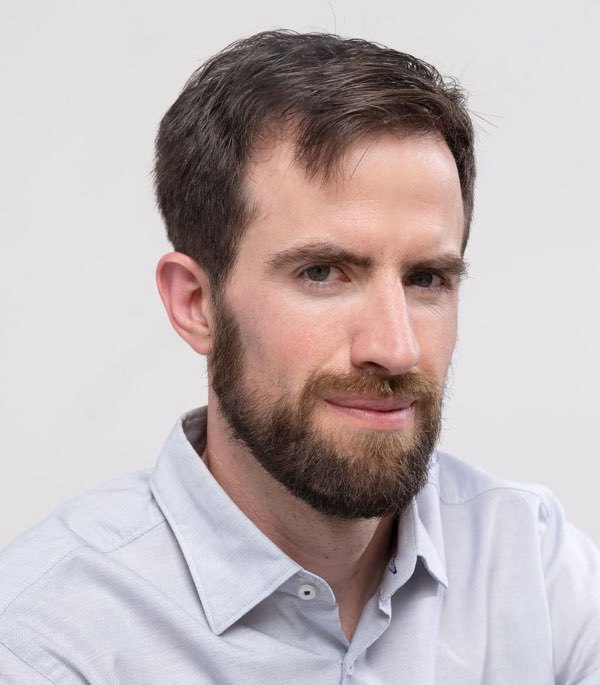
Portrait of Ben Tyson
By the numbers, all time
(Running totals. The 2008–2015 numbers are on a hard drive somewhere — these only go up.)
15+
campaigns and programs since 2008
100+
staff managed
110+
wins I've been part of
2.9M+
doors knocked
2M+
calls made
19M+
texts sent

Experience

Where I've done it.

Ben Tyson with his son at a Los Angeles ballot drop box in 2026

Dropping off my ballot in LA, 2026. Co-pilot included.

Grab the full résumé (PDF)
  1. 2020–now
    Co-Founder & Campaigns Director, Good Fight Political / HomeField
    Built a voter-contact platform and consulting shop from scratch — raised $350K, brought in $5.1M in client revenue over five years, and somehow also ended up running payroll, HR and taxes for a team in six states. Day to day, I design the targeting and execution for outreach, recruitment, persuasion and GOTV programs all over the country.
  2. 2026
    Campaign Manager, Adam Miller for Los Angeles Mayor
    A 14-candidate, top-two primary in the second-biggest city in the country. My turnout forecast landed within 4.8% of the final count.
  3. 2022
    Campaign Manager, Jimmy Gomez for Congress, Los Angeles
  4. 2020–21
    Co-Founder & Managing Director, Vote From Home 2020
    Started it in the first weeks of COVID to help swing-state Democrats vote by mail in Michigan, North Carolina, Pennsylvania and Georgia. Raised $1.5M from grassroots donors and ran a fully remote volunteer program — 470,000+ calls and 19M+ texts.
  5. 2018–20
    Project Director, OTG Strategies
    Worked directly for Paul Dunn running three statewide paid canvass programs — Nevada and Arizona for the LCV independent expenditure, and Tennessee for Phil Bredesen. 11 offices, 62 staff, 1.4M+ doors in just over three months. Best crash course in paid canvass math I could've asked for.
  6. 2017–18
    National Field Director, Let America Vote
    Built a volunteer field operation from zero in Iowa, Georgia, Nevada, New Hampshire and Tennessee — 340,000+ doors, 111,891 calls, 340,888 texts, and 100 targeted down-ballot candidates elected. Plus the 2017 Virginia House target program (see below re: those 0.4 points).
  7. 2016
    Coordinated Campaign Director, Missouri Democratic Coordinated Campaign
    Kander for Senate and Koster for Governor, two of the most targeted statewide races in the country. $4.5M budget, 40+ staff, 4,400 volunteers, 800,000+ volunteer doors and 1.5M+ calls — plus a $2.7M paid canvass that knocked 385,000 more. We still lost (2016 in Missouri was brutal), but the electorate was the size I said it'd be, 87 days out.
  8. 2015
    Campaign Manager, Sylvester Turner for Mayor, Houston
    13 candidates in round one. We beat our vote goal by 17%, then won the runoff by about 4,000 votes.
  9. 2008–14
    Learning the job, six campaigns
    Statewide Field Director, Michigan Coordinated (2014). Deputy Field Director, Christine Quinn for Mayor, New York (2013). Deputy Field Director, Missouri Coordinated (2012). Regional Field Director, Maloney for Congress and Bennet for Colorado (2010). And where it all started: Field Organizer, Obama for America, Pueblo, Colorado (2008).
  10. School
    Lewis & Clark College, B.A. in Economics
    Concentration in public policy, minor in poli sci. Explains the spreadsheets.

Just about every kind of race, just about everywhere.

15
states I've run programs in
3 of 4
biggest US cities — New York, Los Angeles and Houston mayor's races
Win or lose
I've had both, and every race in every place taught me something I still use.
Races
PresidentU.S. SenateGovernorCongressMayorState legislature
Organizations
Candidate campaignsCoordinated campaignsPACsIndependent expendituresIssue advocacyVote-by-mail
Terrain
Rural ColoradoSouthwest MissouriDetroitSt. LouisHoustonNew York CityLos Angeles
Programs
Volunteer fieldPaid canvassInterns & fellowsDistributed & remoteRelationalTexting

What I've learned along the way

Eighteen years of figuring out which numbers actually matter.

A campaign throws off thousands of numbers a day. Most of them are noise. The job is knowing which handful predict votes — and building everything around those.

Data & forecasting

I write my turnout number down months out. Then I check it against the count.

Every field program starts with one number — how many people are going to vote. Get it wrong and every goal downstream is wrong too. These are the forecasts exactly as they went into the plan, before anyone cast a ballot. No edits after the fact.

● Forecast, as a share of the final count| Final turnout (100%)■ Shaded: within 5%
Missouri Coordinated, 2012 · I was Deputy Field Director

How a win number actually gets built

Start with how many people will vote. Take 51%. Subtract the voters who are reliably yours. Whatever's left is the job.

Expected electorateeveryone who votes
2,800,000
Win number51% of the electorate
1,428,000
Democratic base41%, reliably ours
1,151,108
Persuasion pool16%, genuinely up for grabs
448,000
The gapwhat field has to go find
276,892

So the program had to win roughly 6 in 10 of those 448,000 persuadable voters. That's the whole race, in one number — and every universe, goal and staffing decision after it came from there.

Which way I miss

Every time, actual turnout came in 4 to 7% above my forecast. I'd rather tell you that than have you find it yourself. Knowing which way your own numbers lean is half the job — mine run a little low.

Virginia, 2017

9 of 10 House of Delegates targets I picked that spring went the way the plan called. The tenth? Lost by 0.4 points. After a recount. (Still annoyed.)

Georgia runoff · a call in public

On December 22, 2020 — two weeks out — I published a read of the early-vote data arguing Democrats could win both seats if we kept chasing absentee ballots. On January 5, Warnock and Ossoff both won.

Read what I wrote then →
The method

Turnout projection → vote goal → ID goal → contact goals → volunteer goals → recruitment goals. Everything downstream inherits from that first number, so it'd better be right.

See the whole forecasting record →

The nuts and bolts

Big plans are easy. Here's what actually running one looks like.

Pulled straight from field plans I wrote — the top-line numbers, minus the stuff that stays inside a campaign (sorry, no targeting scores).

Missouri, 2016 · the org chart

One Field Director. Up to 70 organizers. 4,400 volunteers.

This is the structure I built for 2016 — every layer with its own daily, weekly and monthly goals, rolling up into one Goal vs. Actual report. A national program would be this, times nineteen states.

Field Director1 · reports to the campaign manager
Deputy Field Directors3, including a statewide deputy
Regional Field Directors7 at full staffing
Field Organizers35 at launch, 70 at full staffing
Volunteerswhat the whole thing produced
4,400 volunteers
~20,000 shifts
800,000+ doors
Houston, 2015 · how capacity compounds

The internship program, in four numbers

200interns and fellows (150 + 50)
1,700volunteer shifts a week
1,275of those on the doors
65,000extra knocks on top of the volunteer program

Teams of about 50 interns, each run by 3–5 fellows — and the fellows spent their phone time recruiting more volunteers. That's the whole trick, honestly.

Let America Vote · 2017–18

Five states, from nothing

AKMEVTNHWAIDMTNDMNILWIMINYRIMAORNVWYSDIAINOHPANJCTCAUTCONEMOKYWVVAMDDEAZNMKSARTNNCSCDCOKLAMSALGAHITXFL
■ Blue: 2018 states■ Black: 2017 Virginia program
340,000+
doors
100
targeted candidates elected
111,891
calls
340,888
texts

The playbook

So I wrote the field guide. Literally.

All of it — the forecasting, the metrics, the org charts, the mistakes — eventually ended up in one place. The 2025 Democratic Campaign Field Guide is 15,000 words on building a field program from nothing. It's more than 15 years of field plans, goal calculators and hard lessons in one document, and the closest thing there is to a manual for how I run a program.

“Never end on a no and never end on a yes.”From the Six Pitch Commandments, chapter 6
Read the whole guide (PDF)
Ten chapters, in order
  1. Analyze the district — historics and resources
  2. Craft your Path to Victory — budget topline and win number
  3. Break down the electorate into universes
  4. Look forward and reason backwards — set goals, structure the program
  5. Build the team — staff and volunteer roles
  6. Recruit volunteers — goals, data, confirmations, pitching
  7. Manage and train volunteers — doors, phones, texts, relational
  8. Set up data and VAN — lists, entry, good coding
  9. Report and monitor — tracking and evaluation
  10. Connect field to digital, comms, political and fundraising

My vision for 2028

Field has to change to compete in 2028. Here's how I'd build it.

The math that made 2016 and 2018 work doesn't hold anymore. So I modeled what a 2028 primary program actually needs — six states in six weeks, then thirteen more a week later — and wrote it up as a full plan.

  1. 1
    Organizers can't carry cold contact anymore.
    A 2028 organizer produces about a sixth of what one did in 2018. Recruitment connect rates fell from 5% to 2–3%, and doors per organizer per week fell from 924 to somewhere between 117 and 176.
  2. 2
    So paid canvass takes every cold door.
    About $7.44 a paid door, all in, against $9.83–$20.45 for a volunteer door under 2028 rules. And it runs on a schedule the campaign controls.
  3. 3
    Volunteers do what only volunteers can.
    Follow-up conversations with voters the canvass already met, with a script built for each one. Nobody gets sent to a cold door. Ever.
  4. 4
    Every door feeds the rest of the campaign.
    Door video becomes ads. IDs feed the model. Every digital sign-up reaches an organizer within 48 hours. That's the ladder.
The plan · what I want to build
One ladder of engagement
19
states, through Super Tuesday
3.9M
paid doors
25,737
active volunteers
2.45M
voter contacts it's designed to deliver

Budget, staffing tables, state-by-state stand-up dates and every assumption behind them — all in the deck.

Flip through the full plan

Beyond field

Ideas for the rest of the campaign.

I can't help myself — everywhere I've worked, I've ended up building the thing I wished existed. These are the ideas I'd bring to the table with paid, comms and digital, and how each one plugs back into organizing. (Full disclosure — they started life as sales decks. I'm a consultant. It happens.)

Paid mediaHomeField Media

Media passed through at cost

Follow $100,000 through the programmatic supply chain and about $31,000 of it ends up as ads a real human actually sees. That drove me nuts. So we built HomeField Media — direct access to premium streaming and CTV, for a flat retainer instead of a commission.

1.27x
more of the budget bidding in the auction
0%
commission on media

Plugs into: organizing (voter-file targeting from field universes), finance (where the money actually lands).

Flip through the deck →
CommunicationsAlways On

Availability is the new message discipline

Trump gets away with a lot because he never stops talking — gaggles, podcasts, rallies, posts. We're not going to match his ethics. We can match his availability. So: a weekly live stream for candidates and electeds, chopped into 30–90 second clips for rapid response, press and fundraising, with a path from the chat into a volunteer shift.

10–20
strong clips from every live hour
90 days
pilot, with a report on reach, sign-ups and dollars

Plugs into: organizing (viewer to volunteer), digital (owned list growth), press.

Flip through the deck →
Digital & messagingHomeField RCS

The text message, rebuilt as an app

Carriers filter texts, inboxes bury email, and ad costs keep going up. RCS puts a verified, branded conversation — images, video, tap-to-reply buttons, read receipts — right inside the phone's own messages app. Nothing to download. It's the closest thing to a campaign app people won't delete.

Verified
sender name and logo instead of a number
Two-way
read receipts and suggested replies

Plugs into: organizing (shift confirmations, GOTV), fundraising, member mobilization.

Flip through the deck →

Writing

Stuff I wrote while it was happening.

Building something for 2028? Let's talk.

Give me 30 minutes and I'll walk you through any of these plans, the budget math behind them, or how I'd stand up organizing in your early states. I'm easy to reach, and I genuinely love talking about this stuff.